Founder
of the congregation
of the
sisters of Consoling Holy Mary
The hand of the providing God often chooses the stones discarded
by men for His own constructions, so that man knows that some constructions
belong completely to Him.
The same happened to f. Arsenio.
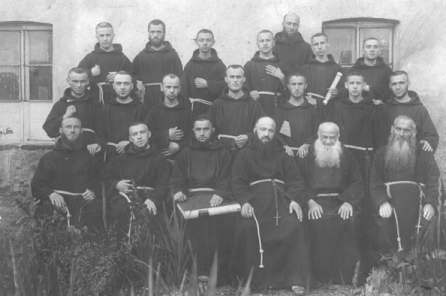 His relationship with Giuseppina Fumagalli, who came from
Cassano, dated back to the times when he was coadjutor in that village.
After she had joined and later left a congregation of sisters, she had
gathered round her some women that she had called “The Sisters of Consoling
Mary”. At first she managed to get a permit from Turin’s Curia but
that was soon withdrawn because of her behaviour. The general vicar disowned
her on 4th October 1890 in Milan, where she had founded a house.
His relationship with Giuseppina Fumagalli, who came from
Cassano, dated back to the times when he was coadjutor in that village.
After she had joined and later left a congregation of sisters, she had
gathered round her some women that she had called “The Sisters of Consoling
Mary”. At first she managed to get a permit from Turin’s Curia but
that was soon withdrawn because of her behaviour. The general vicar disowned
her on 4th October 1890 in Milan, where she had founded a house.
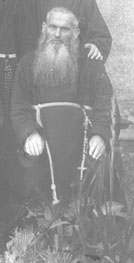 In January 1897 the Fumagalli went to Venice to meet f. Arsenio,
who was there to preach. Probably it had been this event to have placed
him in an unfavourable light in front of the Superiors of his Congregation.
Towards the end of April 1892 he went to Turin to preach at the spiritual
exercises for Fumagalli’s group. Before going there, however, he went to
the archbishop mons. Davide dei Conti Riccardi to ask for the leave and
then he talked to him about the good intention of the young sisters and
the unreliability of the Fumagalli. The archbishop asked him to look after
the group, since he intended to put the Fumagalli to the test and so he
dismissed her from Mother Superior and appointed another one. In the month
of October the general vicar from Turin notified to the general vicar from
Milan that the archbishop had entrusted f. Arsenio with leading the sisters
of Consoling Holy Mary. As a result, Milan’s Curia declared the Institute
canonically recognised.
In the meantime he had adapted the Rules of the Society of
Jesus to the young sisters defining their charisma: “The aim of this
Pius Institute of Consoling Holy Mary is not only to attend to its own
health and perfection through the divine grace, but to devote itself to
the neighbour’s health and perfection through the divine grace and by studying,
attending to both spiritual and corporal works of mercy towards our neighbours,
the very young orphans, so much praised by Jesus Christ” (Summary
of the Constitution, 1).
The Fumagalli was definitely sent away. In 1893 she underwent
also a civil process that was the occasion to slander Father Arsenio, who
was suffering silently. Nothing was said in his favour, but, on the contrary,
he
suffered a lot of humiliations. The Cross continued to exist in his life
and he embraced it for God’s love.
At Christmas in 1892 he clothed the first nuns. Two of them
took vows in June 1893. This is regarded as the official year of the foundation.
Today the nuns are 605 scattered all over the world.
F. Arsenio undertook to form the nuns that were increasing
rapidly and opened new houses. On 14th November 1895 in the present Melchiorre
Gioia Street in Milan, the blessed Andrea Carlo Cardinal Ferrari laid the
foundation stone of the mother house, which officially started in 1898.
In January 1897 the Fumagalli went to Venice to meet f. Arsenio,
who was there to preach. Probably it had been this event to have placed
him in an unfavourable light in front of the Superiors of his Congregation.
Towards the end of April 1892 he went to Turin to preach at the spiritual
exercises for Fumagalli’s group. Before going there, however, he went to
the archbishop mons. Davide dei Conti Riccardi to ask for the leave and
then he talked to him about the good intention of the young sisters and
the unreliability of the Fumagalli. The archbishop asked him to look after
the group, since he intended to put the Fumagalli to the test and so he
dismissed her from Mother Superior and appointed another one. In the month
of October the general vicar from Turin notified to the general vicar from
Milan that the archbishop had entrusted f. Arsenio with leading the sisters
of Consoling Holy Mary. As a result, Milan’s Curia declared the Institute
canonically recognised.
In the meantime he had adapted the Rules of the Society of
Jesus to the young sisters defining their charisma: “The aim of this
Pius Institute of Consoling Holy Mary is not only to attend to its own
health and perfection through the divine grace, but to devote itself to
the neighbour’s health and perfection through the divine grace and by studying,
attending to both spiritual and corporal works of mercy towards our neighbours,
the very young orphans, so much praised by Jesus Christ” (Summary
of the Constitution, 1).
The Fumagalli was definitely sent away. In 1893 she underwent
also a civil process that was the occasion to slander Father Arsenio, who
was suffering silently. Nothing was said in his favour, but, on the contrary,
he
suffered a lot of humiliations. The Cross continued to exist in his life
and he embraced it for God’s love.
At Christmas in 1892 he clothed the first nuns. Two of them
took vows in June 1893. This is regarded as the official year of the foundation.
Today the nuns are 605 scattered all over the world.
F. Arsenio undertook to form the nuns that were increasing
rapidly and opened new houses. On 14th November 1895 in the present Melchiorre
Gioia Street in Milan, the blessed Andrea Carlo Cardinal Ferrari laid the
foundation stone of the mother house, which officially started in 1898.
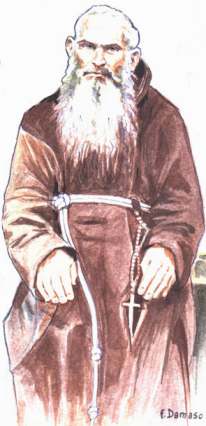 In Turin F. Arsenio was helped by the canonical mons. Giuseppe
Casalegno that is regarded as the cofounder of the Institute. Meanwhile
some nuns started to be unable to bear him, because they considered him
to be either too strict or too paternal. He became the object of envies,
jealousies and slanders. In 1902 he left the Institute. This was another
big cross he was carrying with faith. Since then he didn’t want to get
involved anymore in the events of the congregation, he didn’t even tell
what he had done up to then. But he kept thinking and praying for his nuns.
In 1908 he wrote to Sister Maddalena Defendi: “…I always
pray for all you, and even more times a day, especially for those who pray
for me, so you are one of the first ones: I always remember the dead ones:
and every day during the Holy Mass I always do a memento for all the living
and the dead ones: and every month I celebrate some Masses for all the
living and the dead nuns and for the progress and the good state of the
Institute” (Mario Lessi-Ariosto, God wanted, did
and won, vol. II, Rome 1993, 89).
In the same year he wrote again to the same sister: “I
thank you for the nice letter you wrote to me, and for the good News you
gave me about the good progress of the Institute, as I see that God is
opening new houses for you; I do not really know how many they are, but
I suppose they must be certainly a lot. Let us praise and thank God, who
is pleased of you, since he augments you and puts you to good use gladly
in his vineyard” (Ivi, 90).
And, in the last letter of 1909, he pleaded sister Maddalena:
“See always more than you can to the observance of the holy rules and
of the discipline, but without letting charity fail. Lead them to their
aim firmly and mildly. See to it that in the community charity might always
reign together with joviality, that they always rejoice in the Lord: and
you will see how light your office will become” (Ivi,
93).
These letters reveal us the heart of a man who was able to
forgive whom had done him wrong. The imitation of Christ is really total.
In Turin F. Arsenio was helped by the canonical mons. Giuseppe
Casalegno that is regarded as the cofounder of the Institute. Meanwhile
some nuns started to be unable to bear him, because they considered him
to be either too strict or too paternal. He became the object of envies,
jealousies and slanders. In 1902 he left the Institute. This was another
big cross he was carrying with faith. Since then he didn’t want to get
involved anymore in the events of the congregation, he didn’t even tell
what he had done up to then. But he kept thinking and praying for his nuns.
In 1908 he wrote to Sister Maddalena Defendi: “…I always
pray for all you, and even more times a day, especially for those who pray
for me, so you are one of the first ones: I always remember the dead ones:
and every day during the Holy Mass I always do a memento for all the living
and the dead ones: and every month I celebrate some Masses for all the
living and the dead nuns and for the progress and the good state of the
Institute” (Mario Lessi-Ariosto, God wanted, did
and won, vol. II, Rome 1993, 89).
In the same year he wrote again to the same sister: “I
thank you for the nice letter you wrote to me, and for the good News you
gave me about the good progress of the Institute, as I see that God is
opening new houses for you; I do not really know how many they are, but
I suppose they must be certainly a lot. Let us praise and thank God, who
is pleased of you, since he augments you and puts you to good use gladly
in his vineyard” (Ivi, 90).
And, in the last letter of 1909, he pleaded sister Maddalena:
“See always more than you can to the observance of the holy rules and
of the discipline, but without letting charity fail. Lead them to their
aim firmly and mildly. See to it that in the community charity might always
reign together with joviality, that they always rejoice in the Lord: and
you will see how light your office will become” (Ivi,
93).
These letters reveal us the heart of a man who was able to
forgive whom had done him wrong. The imitation of Christ is really total.