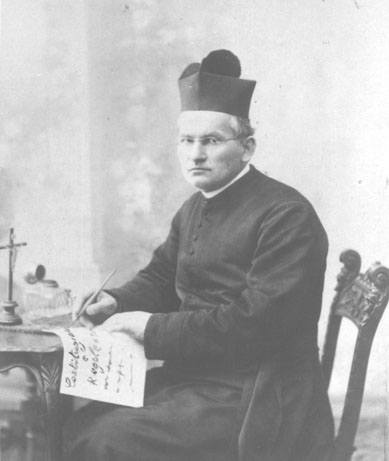
 Jesuit
Such religious choice was due to the wish of a more intense
spiritual life. This is revealed in a sermon given to some nuns and where
he is also speaking to himself: “Why have we taken Holy Orders? To sanctify
our lives and to be of help to others, according to the Divine precept:
Love God more than anything else (which means sanctifying our lives) and
your neighbour as yourself (that is to do good to your neighbour). Our
sanctification is our aim, which cannot be achieved without means. Knowledge
cannot be reached without studying – you cannot learn needlework if you
do not learn stitches; you cannot make a suit without any material. Which
are our means then? Silence, humility, purity, charity, obedience, conformity
to God’s will, these are the means for our calling” (P
391/5 f. 4v.).
His choice to become a Jesuit was quite deep as we can understand
if we read some notes taken during the spiritual exercises in 1886: “You
call yourself a Jesuit, but are you a true follower of Jesus Christ? Do
you imitate Him in your deeds? Do you follow Him in the doctrines? You
should be obliged to do this as a mere Christian, as a Jesuit you are even
more obliged to follow Him closer, and more totally. Do you really believe
in what Jesus Christ teaches you in the Gospel?” (P
391/18 p. 50).
Jesuit
Such religious choice was due to the wish of a more intense
spiritual life. This is revealed in a sermon given to some nuns and where
he is also speaking to himself: “Why have we taken Holy Orders? To sanctify
our lives and to be of help to others, according to the Divine precept:
Love God more than anything else (which means sanctifying our lives) and
your neighbour as yourself (that is to do good to your neighbour). Our
sanctification is our aim, which cannot be achieved without means. Knowledge
cannot be reached without studying – you cannot learn needlework if you
do not learn stitches; you cannot make a suit without any material. Which
are our means then? Silence, humility, purity, charity, obedience, conformity
to God’s will, these are the means for our calling” (P
391/5 f. 4v.).
His choice to become a Jesuit was quite deep as we can understand
if we read some notes taken during the spiritual exercises in 1886: “You
call yourself a Jesuit, but are you a true follower of Jesus Christ? Do
you imitate Him in your deeds? Do you follow Him in the doctrines? You
should be obliged to do this as a mere Christian, as a Jesuit you are even
more obliged to follow Him closer, and more totally. Do you really believe
in what Jesus Christ teaches you in the Gospel?” (P
391/18 p. 50).
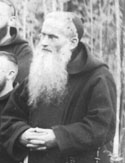 On 14th December 1875 he reached the seat of his noviciate
in France, on 25th December he took the society’s habit and with the first
profession of 25th December 1877, he ended his first vocational training
period. He resumed studies, but had to interrupt them because of poor health
and he was moved to Cremona, to Vida College, where, from 1879 to 1883,
he was prefect for students. In 1882 he succeeded in passing the philosophy
examination. In 1885 he resumed his studies in Croatia and passed his moral
theology exam, but was not able to pass the difficult “ad gradum” examination
which would have given him the admission in the Society as professed, therefore
he could only become a spiritual coadjutor. A period of frequent movements
followed: Soresina (1885-1886, in Vida College), Wien (1886-1887 for his
third year of probation), Mantova, Venezia, Brescia, Venezia (1887-1891).
Here in Venice he devoted himself to an intense apostolate: he preached
tridua, spiritual and lent exercises, he confessed, taught catechism, held
spiritual retreats for Clarisse, Capuchin and Salesian nuns.
Of course, as a Jesuit, he particularly liked spiritual exercises
during which he was particularly demanding towards himself, as we can understand
when he describes the indispensable requisites of the priests who hold
them: “Who takes the chair has to be more orator than preacher: orator,
that is a man who prays and meditates. To express our meditations well,
we must have thought them over well, and chewed them in front of the crucifix.
Before persuading others, we must be firmly persuaded ourselves, only when
we are strongly and deeply convinced about what we want to persuade others,
our words will be the most touching ones” (P 391/22,
5r.).
The first problems with the Society of Jesus began, due to
various reasons: health, limited education level, lack of striking qualities,
the fact that he met a Giuseppina Fumagalli, of whom we will talk later
on, lack of understanding on behalf of some superiors. He was therefore
sent to Trento, at that time belonging to a foreign country, and then soon
after to Piacenza, where he became spiritual director in the seminary of
the institute for emigrants founded by the blessed Giovanni Battista Scalabrini.
Definetly the friendship with Bonomelli and Scalabrini, at that time in
some difficulty with the roman curia, did not help his staying inside the
Society of Jesus. Infact he was eventually asked to resign, which he did
in August 1892.
On 14th December 1875 he reached the seat of his noviciate
in France, on 25th December he took the society’s habit and with the first
profession of 25th December 1877, he ended his first vocational training
period. He resumed studies, but had to interrupt them because of poor health
and he was moved to Cremona, to Vida College, where, from 1879 to 1883,
he was prefect for students. In 1882 he succeeded in passing the philosophy
examination. In 1885 he resumed his studies in Croatia and passed his moral
theology exam, but was not able to pass the difficult “ad gradum” examination
which would have given him the admission in the Society as professed, therefore
he could only become a spiritual coadjutor. A period of frequent movements
followed: Soresina (1885-1886, in Vida College), Wien (1886-1887 for his
third year of probation), Mantova, Venezia, Brescia, Venezia (1887-1891).
Here in Venice he devoted himself to an intense apostolate: he preached
tridua, spiritual and lent exercises, he confessed, taught catechism, held
spiritual retreats for Clarisse, Capuchin and Salesian nuns.
Of course, as a Jesuit, he particularly liked spiritual exercises
during which he was particularly demanding towards himself, as we can understand
when he describes the indispensable requisites of the priests who hold
them: “Who takes the chair has to be more orator than preacher: orator,
that is a man who prays and meditates. To express our meditations well,
we must have thought them over well, and chewed them in front of the crucifix.
Before persuading others, we must be firmly persuaded ourselves, only when
we are strongly and deeply convinced about what we want to persuade others,
our words will be the most touching ones” (P 391/22,
5r.).
The first problems with the Society of Jesus began, due to
various reasons: health, limited education level, lack of striking qualities,
the fact that he met a Giuseppina Fumagalli, of whom we will talk later
on, lack of understanding on behalf of some superiors. He was therefore
sent to Trento, at that time belonging to a foreign country, and then soon
after to Piacenza, where he became spiritual director in the seminary of
the institute for emigrants founded by the blessed Giovanni Battista Scalabrini.
Definetly the friendship with Bonomelli and Scalabrini, at that time in
some difficulty with the roman curia, did not help his staying inside the
Society of Jesus. Infact he was eventually asked to resign, which he did
in August 1892.
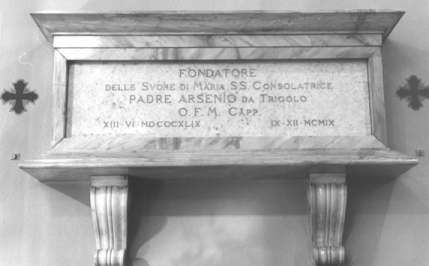 Father Arsenio believed in St. Ignazio’s spirituality and
he had identified himself with it, consequently he was particularly sorry
when he had to leave the Society. But he had learnt to transform sufferings
into spiritual richness, because he was convinced that “the crucifix
is the main road to Paradise” (P 391/26/33, p.
2).
Father Arsenio believed in St. Ignazio’s spirituality and
he had identified himself with it, consequently he was particularly sorry
when he had to leave the Society. But he had learnt to transform sufferings
into spiritual richness, because he was convinced that “the crucifix
is the main road to Paradise” (P 391/26/33, p.
2).